Photo: Freepik
Wallace Stevens once said, “The most beautiful thing in the world is, of course, the world itself”.
What do you think about this quote?
As a group of people having a deep appreciation for travel, the way our company perceived it was special. We deem that: By the act of going, exploring, and immersing oneself in the global landscape - full of stunning places and soulful human beings, one is feasting on the beauty of the world indeed.
With that being said, in this article, we are delighted to introduce to you our top 5 landmarks of Vietnam, which hopefully will make you cherish the world and feel the beauty more.
1. Mount Fansipan - The Roof of Indochina
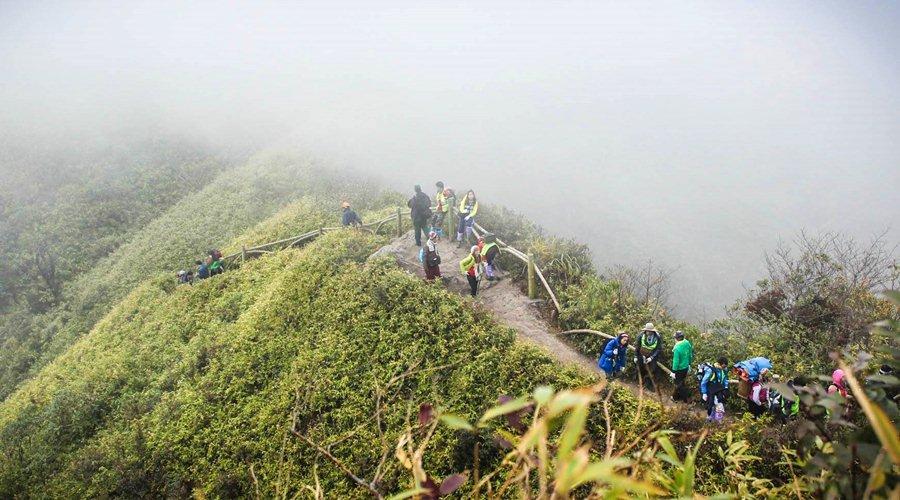
Located in Lao Cai province, Mount Fansipan is proudly the highest peak in Vietnam and the Roof of Indochina with an elevation of 3.143 meters above sea level. Reaching the top, you may drop your jaw at the breathtaking view of floating clouds and ethnic villages sprawling by endless green terraced rice fields, along with the diversity of flora and fauna that are only inhabitant in mountainous top areas.
Don’t worry that you cannot finish the trail because there are two ways to get to the top of Fansipan Mountain up to now.
By hiking
Of course, hiking! Nothing’s better than a rewarding feeling after overcoming challenges to get to the destination on your own. However, the road to Mount Fansipan can be quite dangerous and seemingly endless, with approximately 2-3 days of adventure. Visitors should be in good physical health and are advised to equip themselves with professional mountain climbing gear, hiking experiences, and food on the road.
Source: Collected
By cable car rides
From the Mountain Train carries you to Muong Hoa Valley, you can hop to the cable car at the station there for a quick and convenient solution- many people opt for this method. With the 15-minute ride, you can witness first hand a magnificent view surrounded by clouds and wind swirling up close. If you are afraid of heights, consider taking medicines before en route.
 Source: Collected
Tips: You can update the latest information by visiting the official website of Sun World Fansipan Legend.
2. Phong Nha-Ke Bang National Park
Vietnam is home to myriads of plants and animals with around 34 diverse national parks across the country. Amongst them, Phong Nha-Ke Bang (Quang Binh province) is the largest national park of Vietnam and was inscribed on the World Heritage List UNESCO in 2003, which has made this place one of the top allure destinations for expeditions.
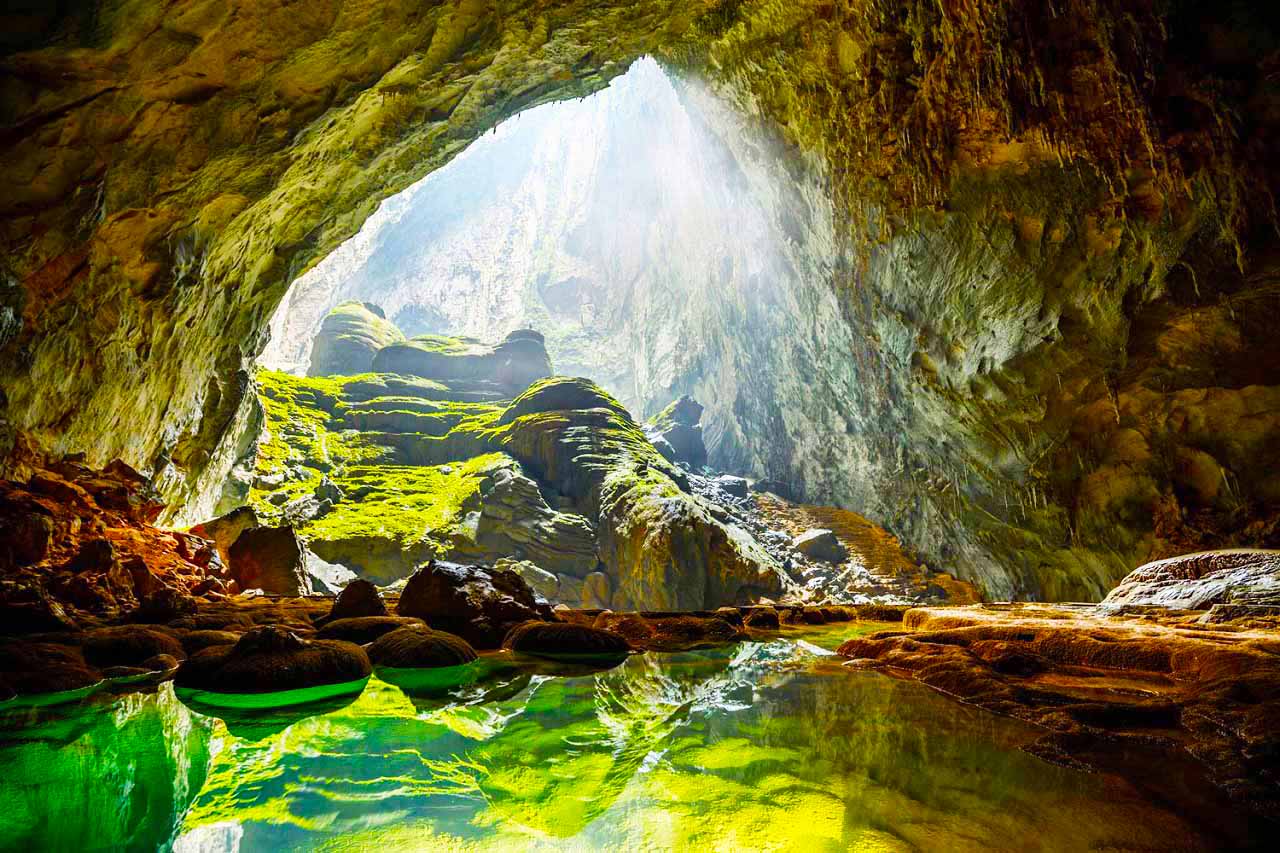
The majestic and enchanting beauty of Phong Nha-Ke Bang (Source: Collected)
This national park is known as “Cave Kingdom” with more than 350 majestic caves including Son Doong - the world's biggest cave, and accompanied by numerous hidden systems beneath towering karsts covered in lush green jungle, resilient rivers with a variety of living lives.
Travelers who visit there can choose to explore based on their interests, from brief afternoon excursions to challenging four-day expeditions, to kayaking, cycling, or hiking adventures. When the night comes, you can also camp and stay within the endlessness of natural wonders in Phong Nha-Ke Bang, the feelings will be totally different from the daytime as the caves acquire an enchanting charm from the gentle radiance of lights along your way.
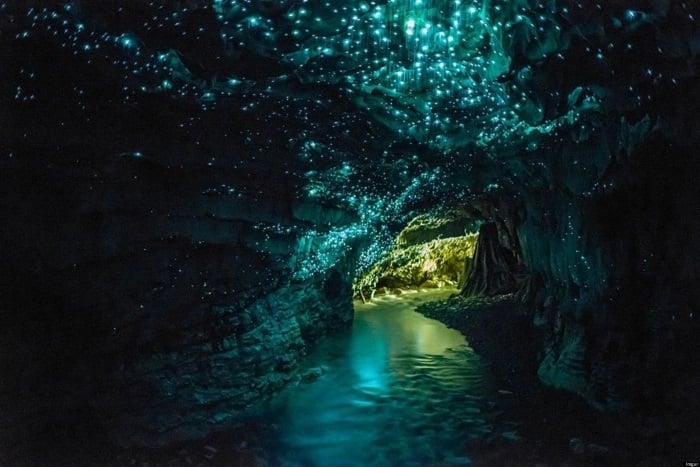
A whole natural cave is illuminated by fireflies (Source: Collected)
3. Hoi An Old Town
Being one of the most famous points of interest in Vietnam, Hoi An (Quang Nam province) has always retained its reputation as of the first quarter of 2023, the number of international visitors to this place reportedly surpassed last year’s total.
From the 15th to 19th centuries, Hoi An had attained foreign cultures mostly from European, Chinese, and Japanese merchants, which have been demonstrated delicately by the ancient temples, yellow walls, colorful lanterns, Japanese bridge, etc. With the mentioned international elements and the indigenous culture of Vietnamese people, Hoi An is special in its own way.
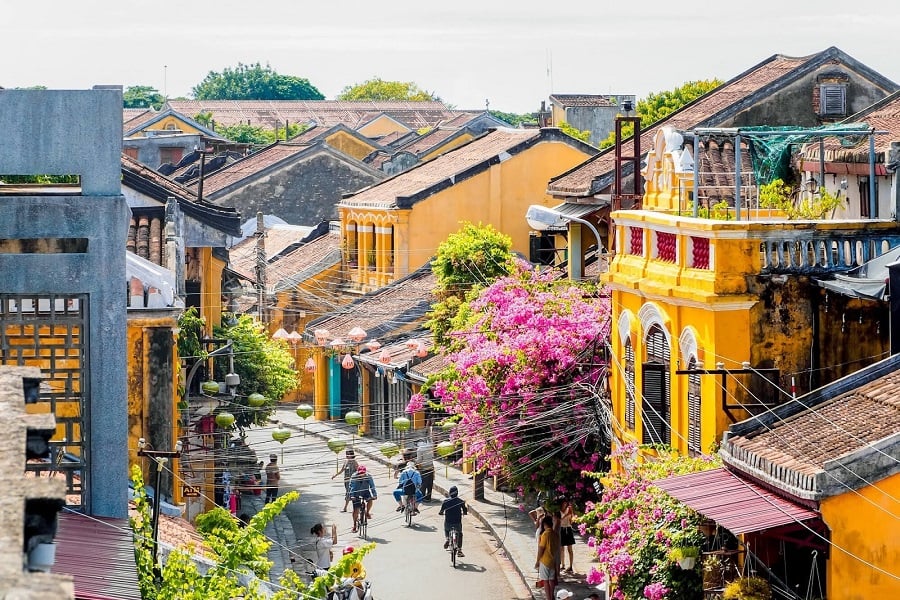 The French-styled architecture with Vietnam's indigenous culture (Source: Collected)
Just by walking or cycling down the Old Town in the daytime, you can experience famous Vietnamese cuisine such as Cao Lau, My Quang, or Com Ga, surrounded by warm-hearted and friendly people. And at nighttime, the whole town is illuminated by thousands of lanterns and flower lights floating along the rivers. We promise that you will never forget that experience, almost enchanted by the beauty of the world.
4. Bui Vien Street
Another destination that allows you to explore by strolling down the street, Bui Vien Street is increasingly becoming popular for Western foreigners, especially younger demographics because of its Western modern atmosphere and lively nightlife.
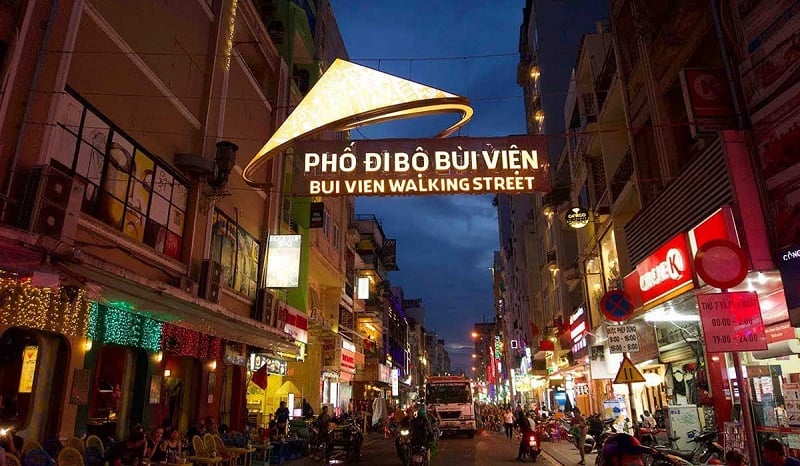 A lively nightlife - Bui Vien Walking Street full of lights and restaurants (Source: Collected)
Visitors can immerse themselves in hundreds of coffee shops, pubs, fine-dining restaurants, and even folk games by local people in Saigon. It is the fusion of international and traditional cultural values that attracts people to come to this place. As of late, the government has promoted Vietnamese culture thereby organizing many festivals, cultural fairs, performances, etc in alignment with binding laws and regulations.
One of the main concerns of travelers is whether Bui Vien Street is safe for them to explore. Regardless of the ongoing effort to maintain public order and the secure environment of the authorities, there are still uncertainties that foreigners should stay alert and have emergency contacts ready anytime, anywhere.
5. Cai Rang Floating Market
Distance from Saigon less than 200 kilometers, Cai Rang Floating Market is a must-visit place for a unique and ethnic experience.
This floating market is situated along the Cai Rang River, approximately 6 kilometers away from the heart of Can Tho City. Despite the evolution of a convenient road traffic system, Cai Rang Floating Market continues to thrive, owing to its economic, cultural, and tourism significance. Today, it stands as an essential symbol of the Mekong Delta.
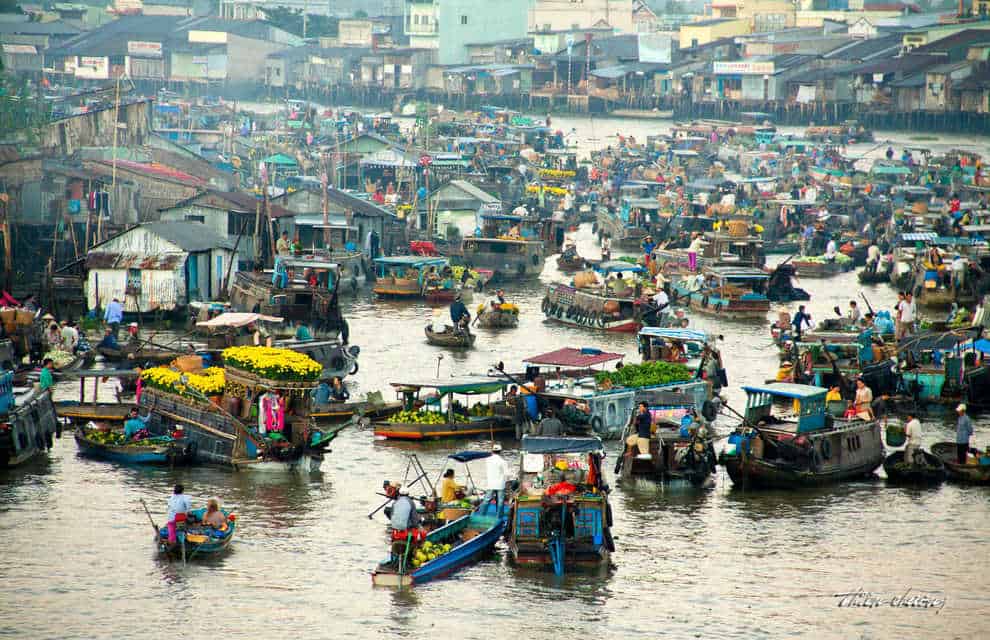
Cai Rang Floating Market is a must-visit place for a unique and ethnic experience (Source: Collected)
Thousands of wooden boats flow steadily by the waters, selling you a variety of goods from hot cozy Hu Tieu, to fresh fruits, to colorful textiles and accessories. Besides, you not only purchase distinct stuff but also learn first hand the culture with local people as most of them have been floating on their boats for more than decades.
If you are a fan of cultural tours or simply enjoy talking with locals, you definitely cannot miss out on Cai Rang Floating Market!
Hurray! We have walked you through five captivating landscapes of Vietnam that you don’t want to skip. Now, let’s embark on your Vietnam adventure, fueled by the wonders. Safe travels and may your trip to this enchanting country be nothing short of extraordinary!
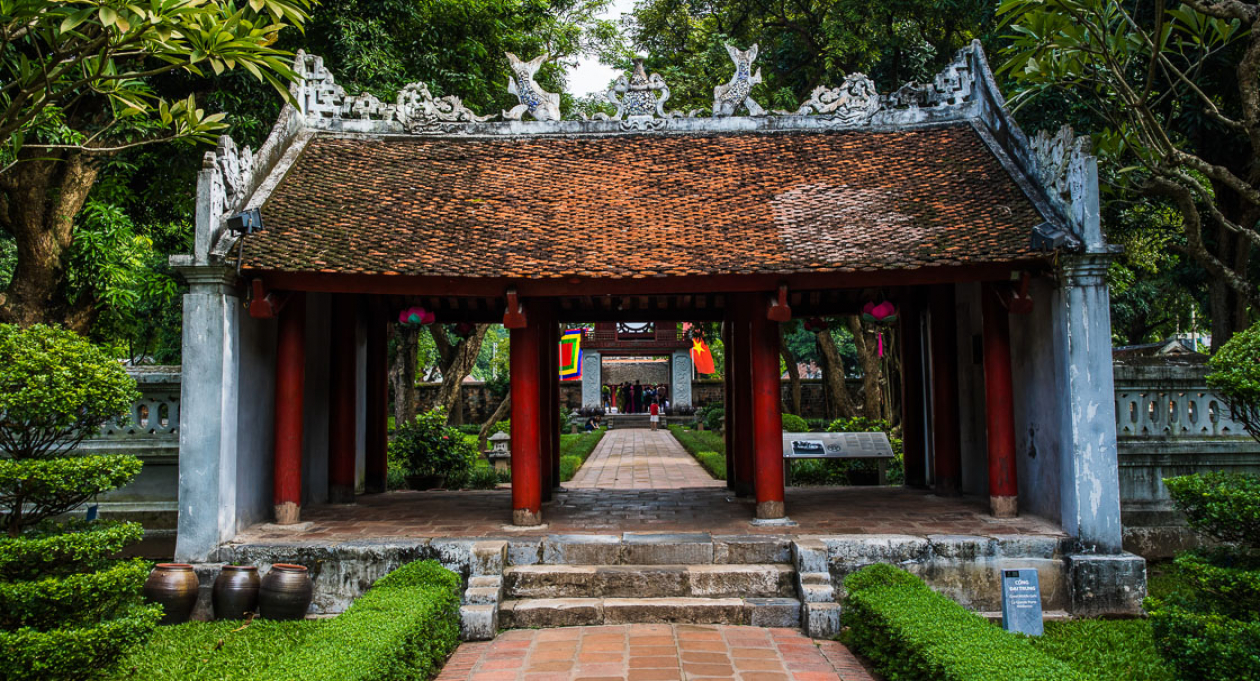
Hanoi will simultaneously surprise, charm and chew you up. Founded along the Red River, Hanoi was named Thang Long (soaring dragon) by Emperor Ly Thai To in 1010. Over a thousand years of war, natural disasters and new administrations, the city grew from swamplands into the charismatic capital it is today. Take in details of the ancient architecture, battle the barrage of millennials on motorbikes and drink fresh bia hơi in the Old Quarter. Here are 11 must-see stops in Hanoi.
Ho Chi Minh Mausoleum
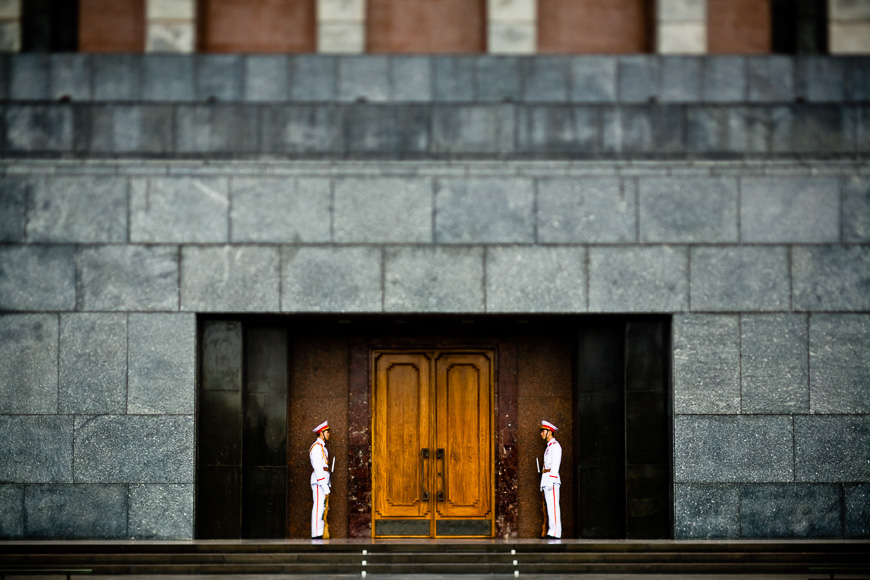
Soldiers stand guard the entrance of Ho Chi Minh's Mausoleum.
This commanding construction was built from 1973 to 1975 to house the embalmed body of Vietnam’s greatest political leader, Hồ Chí Minh. Visitors and Vietnamese queue for hours every morning to pay their respects to the cadaver, dressed in a khaki wardrobe and encased in a glass sarcophagus.
Admission: 35,000 VND
Hours: 8am - 11am, Tue-Thu, Sat-Sun (December to September) last entry at 10:15am
Address: So 1, Hung Vuong, Dien Bien, Ba Dinh
One Pillar Pagoda
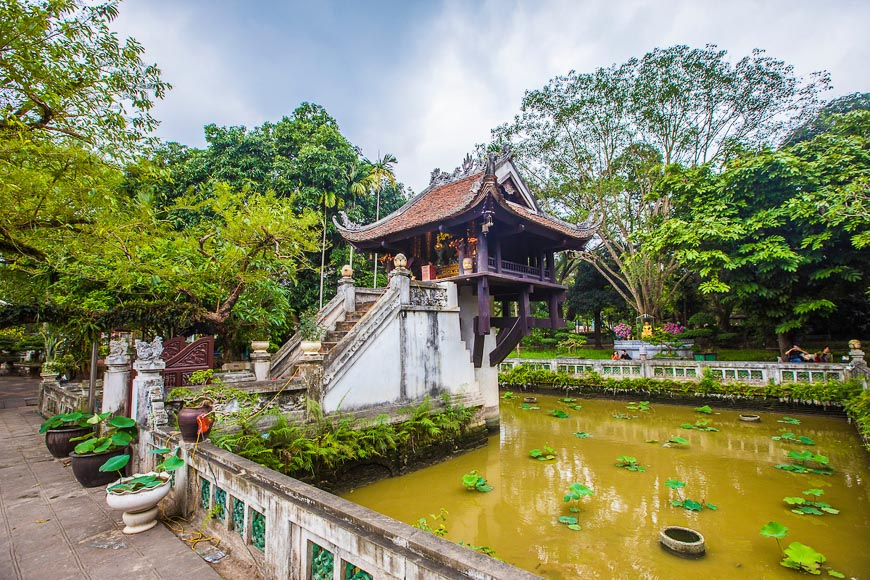
The unique one pillar pagoda in the middle of a lotus pond.
This Buddhist wooden pagoda was built in the middle of a lotus pond on a single stone pillar by the Emperor Ly Thai To in 1049. Archives suggest it was built in honor of the Goddess of Mercy, who answered the Emperor's prayers for a male heir. The structure is designed to resemble a lotus flower blossoming from muddy waters, a symbol of purity in Buddhist philosophy.
Admission: 25,000 VND
Hours: 8am - 11:30am everyday, and 2pm - 4pm, Tue-Thu, Sat-Sun
Address: Chua Mot Cot, Doi Can, Ba Dinh
The Old Quarter
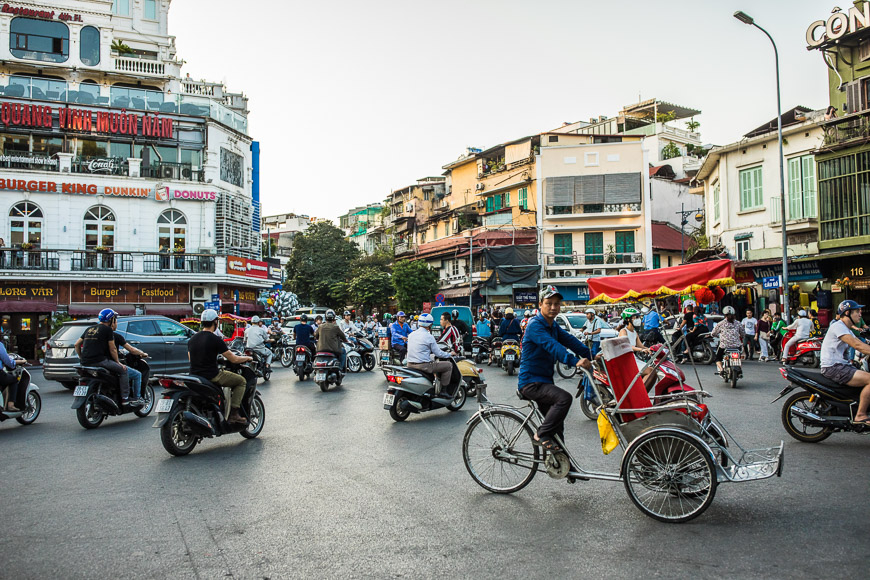
At the top of Hoan Kiem Lake, Dinh Tien Hoang 'roundabout' is a great starting point for exploring the alleys of the Old Quarter.
Hanoi’s historic Old Quarter is a single square kilometre comprised of 36 streets. Since the 15th century, each street has been home to artisans and craftsmen who traded in the specific merchandise for which their street was named. Today, the charm of these streets still remains. Prepare to marvel as you wander from silver street to bamboo street, silk street to decoration street, all within a stone's throw of each other.
TIP: At night, head down to bia hơi corner (the intersection between Ta Hien and Luong Ngoc Quyen) to sample sensational street food and bargain brews.
Admission: Free
Hours: 7am to midnight
Address: North of Hoan Kiem Lake
Hanoi Opera House
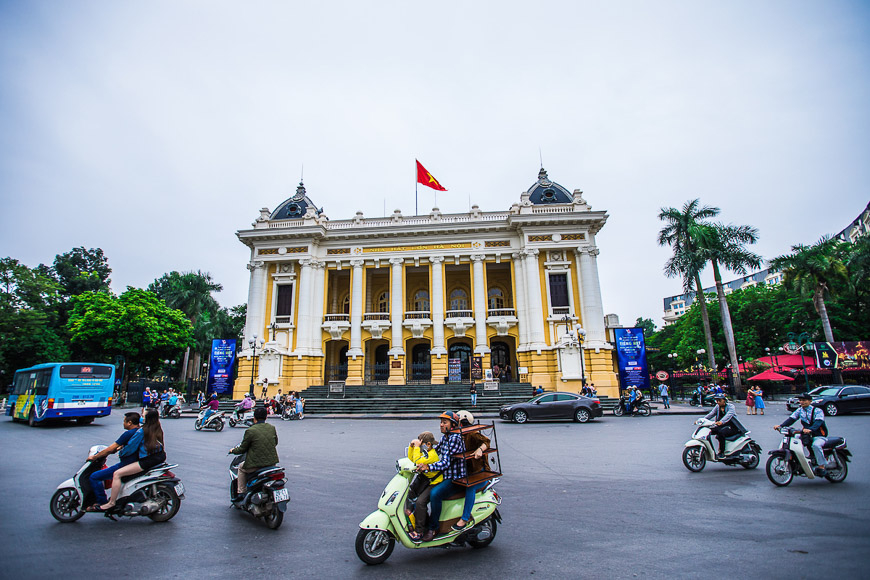
The Opera House is at the edge of Hanoi's French Quarter, where a few colonial buildings have been well preserved.
Constructed at the turn of the 20th century, this beautiful colonial building is the largest theater in Vietnam. After nearly 100 years of operation, the Opera House was carefully refurbished in 1997 and equipped with state-of-the-art facilities. Today the venue attracts renowned performers, productions and musicians.
TIP: Culture lovers should book tickets to see 'My Village' at the Opera House. This impressive showcase combines acrobatics, traditional dance and music.
Admission: 300,000 VND
Hours: Check the website for performances
Address: So 01, Trang Tien, Hoan Kiem
Vietnamese Women's Museum
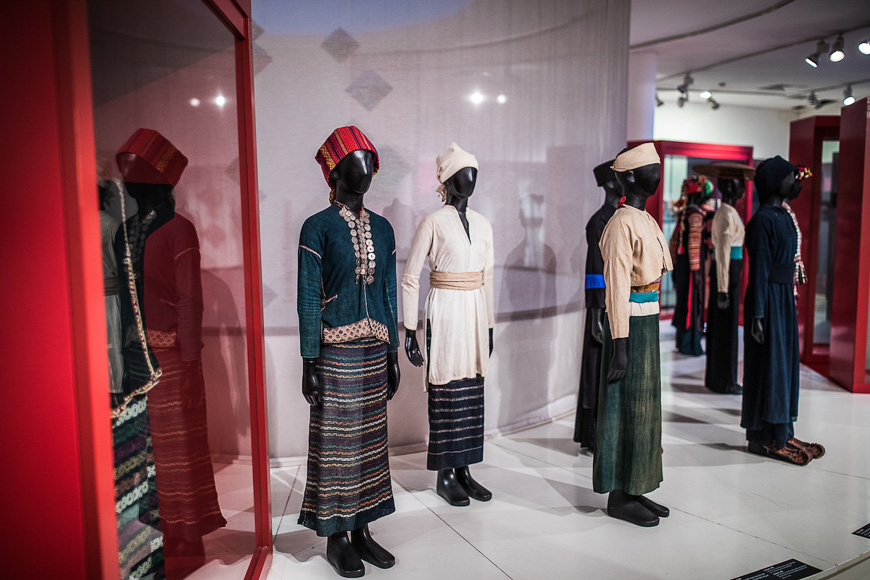
This museum boasts a floor on textiles of ethnic groups, women's crucial role in wartimes and even their practices as mediums of the 'Mother Goddess' worship.
The Vietnamese Women’s Museum is one of the most modern museums in Vietnam. Housing a series of excellent exhibitions presenting artefacts, costumes, crafts, memoirs,and photographs from the past 100 years, the museum reveals the pivotal role of Vietnamese women in their country's history and society.
Admission: 30,000 VND
Hours: 8am - 5pm, Tue-Sun
Address: 36 Ly Thuong Kiet, Hang Bai Ward, Hoan Kiem
The Water Puppet Theatre
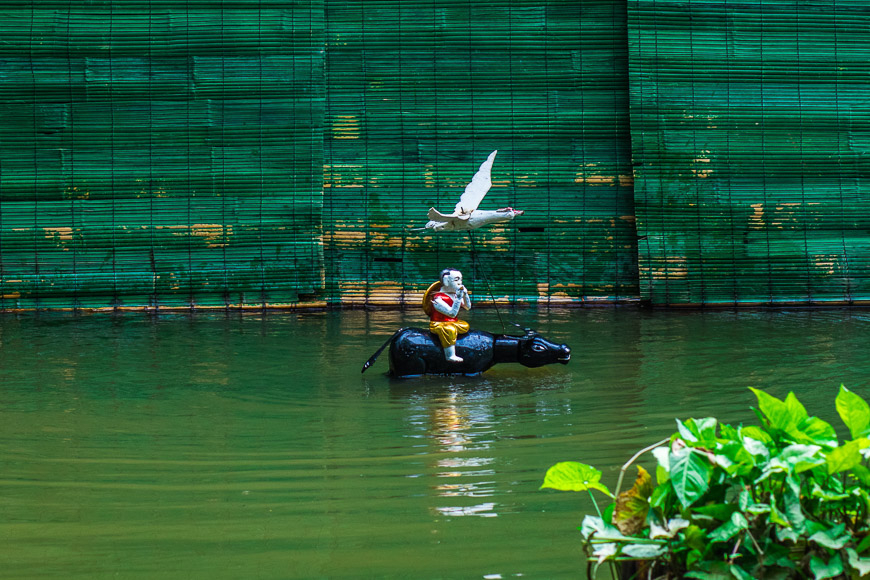
Live music is always performed alongside the puppeteering with traditional instruments and delicate vocals.
Dating back to the 11th century, water puppet performances are ideal for light entertainment and insight into Vietnamese folklore. Wading around in waist-deep water holding bamboo poles, puppeteers operate the lacquered wooden characters from behind a screen, reenacting scenes from rural village life.
Admission: 100,000 VND
Hours: 3:30pm, 5pm, 6:30pm, 8pm, 9:15pm every day, and an additional performance on Sundays at 9:30pm
Address: 57b Dinh Tien Hoang, Hoan Kiem
Hoan Kiem Lake
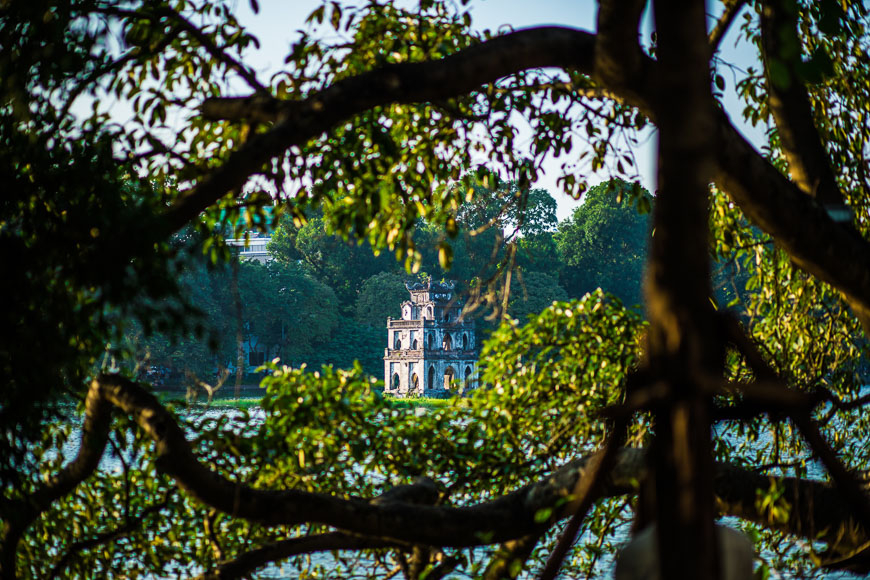
Turtle Tower rests at the centre of 'the Lake of the Restored Sword.
Legend says Emperor Ly Thai To was gifted a magical sword by a giant golden turtle who lived in the lake in order to defeat the Ming dynasty. Once victorious, Ly Thai To gave the sword back to the turtle who dove down to return the sword to the gods. Hoan Kiem Lake is admired for its beauty as well as insight into the daily life of Hanoians. Watch locals practicing their daily exercise and Tai Chi routines in the gardens by the water's edge.
Admission: Free to the general public
Hours: Open all day
Ngoc Son Temple
The Ngoc Son Temple, or The Temple of the Jade Mountain, is situated on a small tree-sheltered island on the north side of Hoan Kiem Lake. Connected by a stunning scarlet bridge, this classic Vietnamese structure was built in honour of the intellectual scholar Saint Van Xuong, and national hero General Tran Hung Dao. In 1884, the Confucian scholar made a series of renovations to the site, including adding parallel sentences (câu đối) or word puzzles to the walls.
Admission: 20,000 VND
Hours: 7:30am - 5:30pm, every day
Address: Hoan Kiem Lake
Temple of Literature
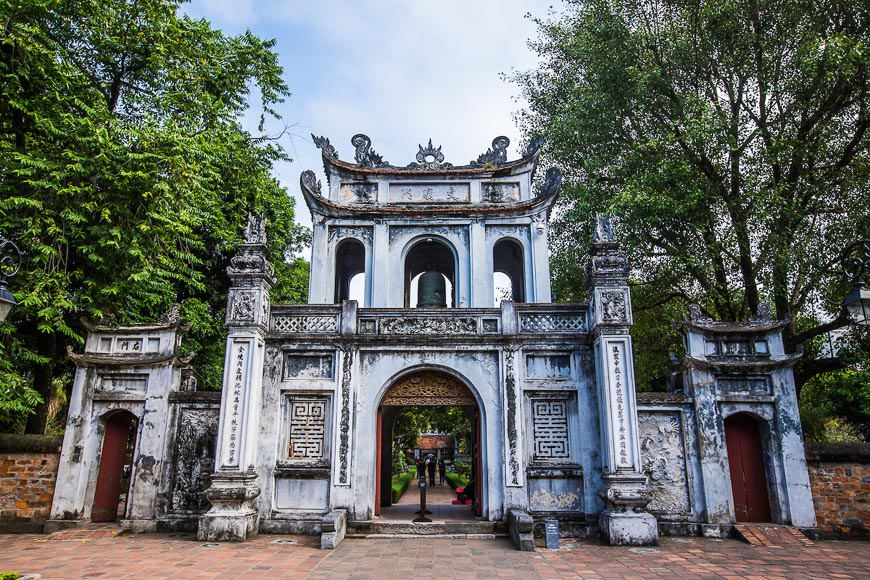
The main gate of the nation's oldest university, be sure to visit during lunch time to avoid crowds.
Built by Emperor Ly Thanh Tong during the Ly dynasty, the Temple of Literature (Văn Miếu in Vietnamese) was erected in honour of the philosopher Confucius and his disciples in 1070. In 1076, it became home to Hanoi’s first university, Quốc Tử Giám. The site is one of the oldest in Hanoi and a national symbol of Vietnamese education and architecture. Today, the temple houses five court yards, records of Vietnamese scholars, and statues of turtles which are said to bring students good luck in their exams.
Admission: 30,000 VND
Hours: 8am - 5pm, from November until March; 7:30am - 6pm for the rest of the year, Tue-Sun
Address: 58 Quoc Tu Giam, Dong Da
Museum of Ethnology
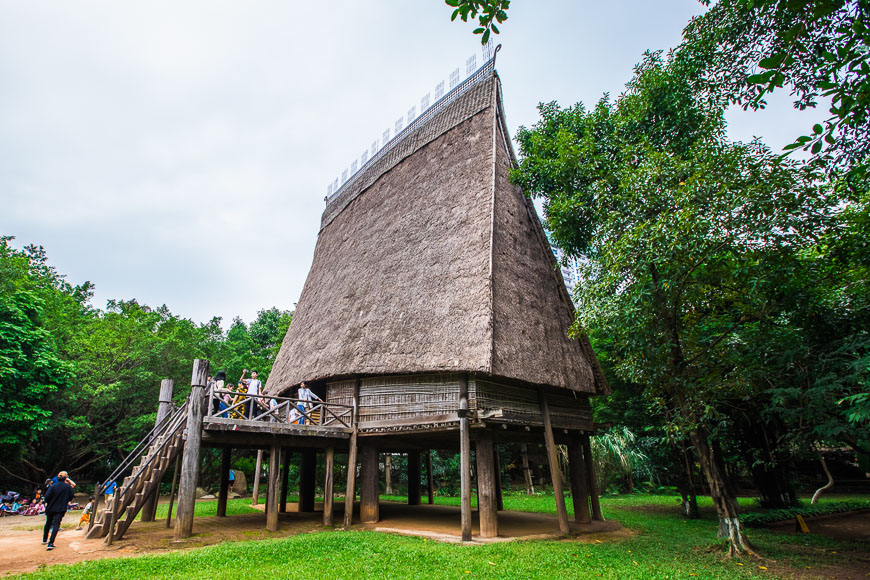
The gardens feature traditional structures, including the communal houses of the Bahnar or Giarai ethnic groups which can reach up to 30 metres high.
This amazing museum examines the everyday life of Vietnam's 54 ethnic minorities. Designed by ethnic Tay architect Ha Duc Linh and French architect Veronique Dolfus, the museum hosts three main exhibition areas. Exhibitions display cultural costumes, handicrafts, videos and artefacts; while the outdoor space showcases impressive life-size replicas of ethnic architecture.
Admission: 40,000 VND
Hours: 8:30am - 5:30pm, Tue-Sun
Address: Nguyen Van Huyen, Nghia Do, Cau Giay
Saint Joseph's Cathedral
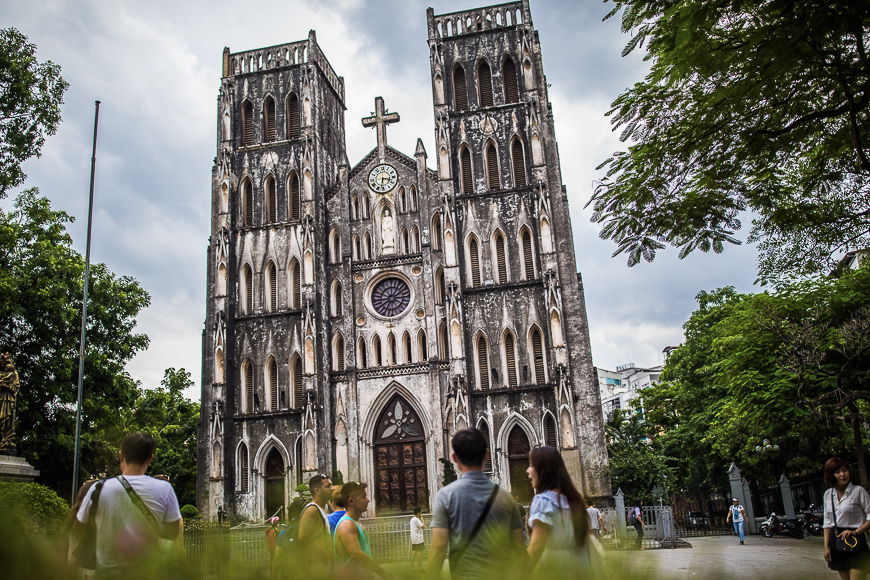
The cafes by the Cathedral are a perfect spot to watch the bustle of Hanoi.
Saint Joseph’s Cathedral (also known as Hanoi Cathedral), was built on the site of the Bao Thien Tower, which was the most famous landmark in the capital during the Ly Dynasty. The architect was inspired by the Neo-Gothic style of the Notre Dame de Paris. When visiting, expect to see a multicultural crowd of worshippers and plenty of Vietnamese newlyweds having romantic photo shoots.
Admission: Free
Hours: 8am - noon, 2pm - 6pm, every day
Address: 40 Nha Chung, Hoan Kiem
Source: Vietnam Tourism
Last update: Thursday October 09, 2025
Travelers from around the world are falling in love with Vietnam — and not just for its stunning landscapes, delicious cuisine, and rich culture. Many of them are also raving about the smooth and supportive experience they’ve had with our Vietnam visa help services.
Whether you're a first-time visitor or a frequent explorer of Southeast Asia, obtaining the right visa is crucial for a worry-free trip. Based on countless Vietnam visa service reviews and real customer testimonials, we've identified the top 5 reasons why travelers consistently rate us among the best Vietnam visa services available.
1. Fast and Hassle-Free Processing
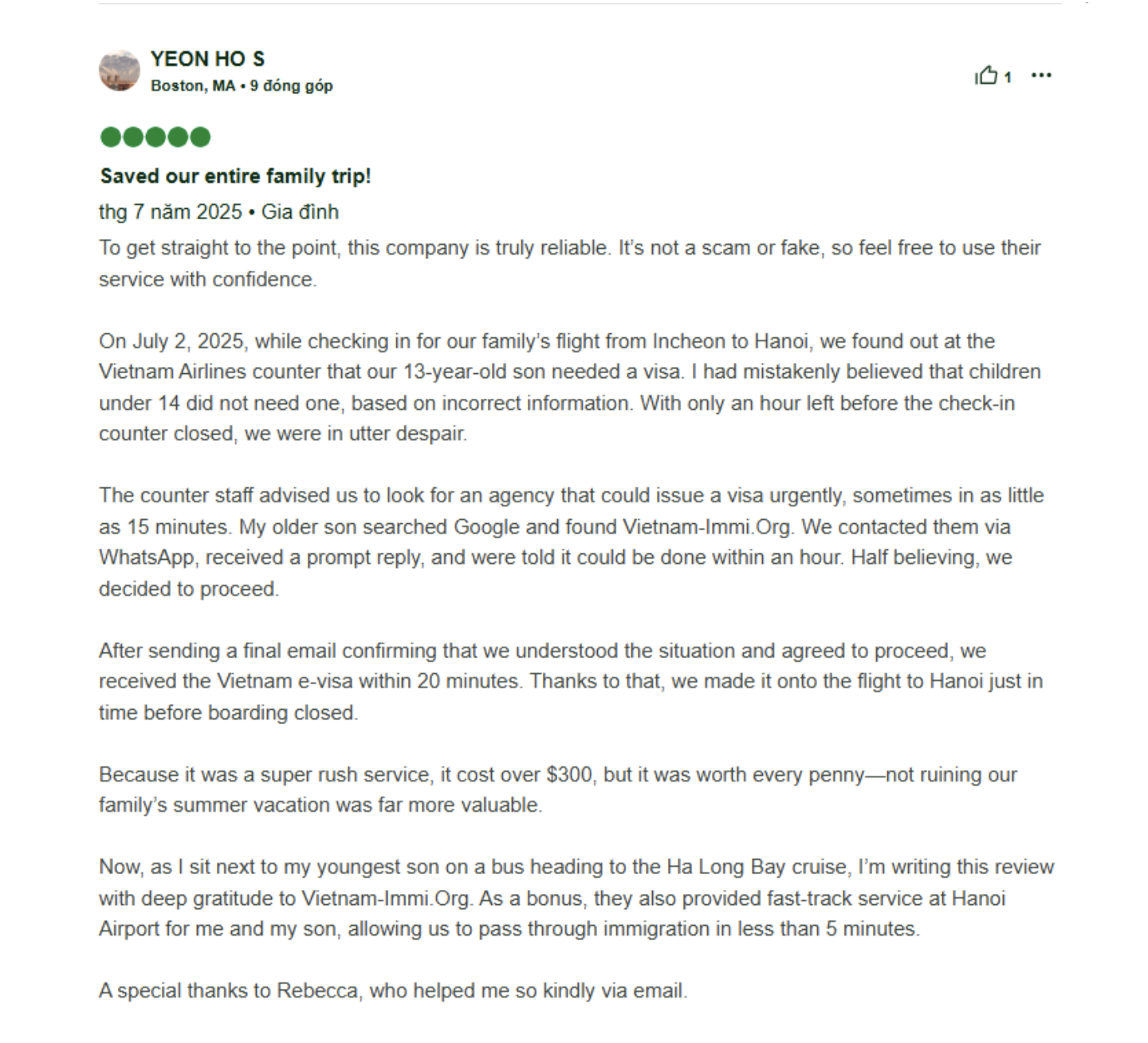
One of the most common things travelers highlight in our Vietnam visa service reviews is our speed. In a world where travel plans can change in an instant, speed and reliability matter.
We offer:
Express processing for urgent travel needs
E-visa assistance with step-by-step guidance
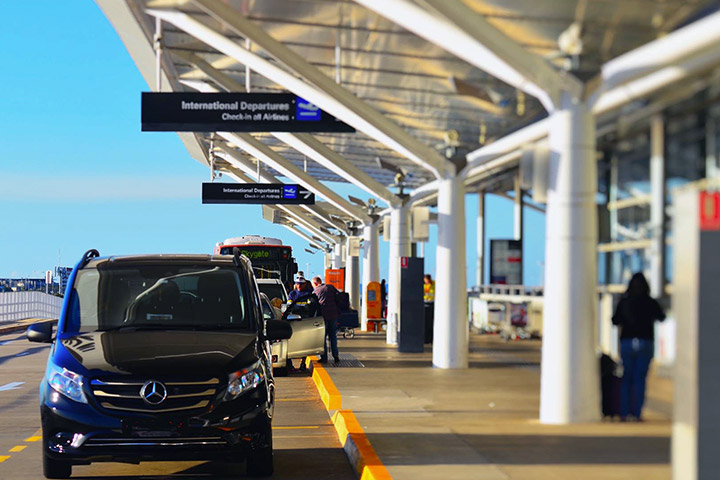
Airport services with smoothly transit
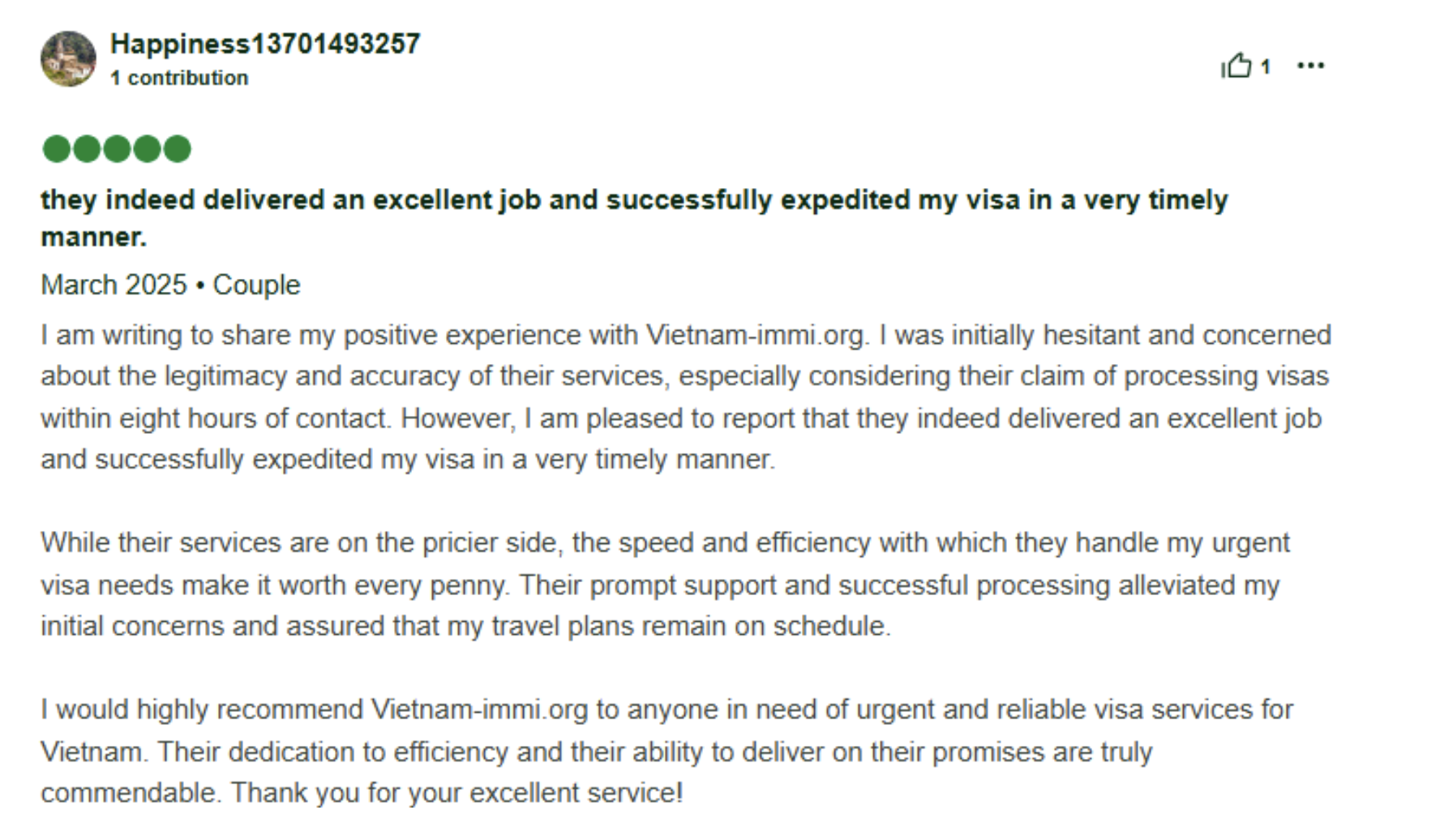
Real Customer Feedback from Tripadvisor (5/5 ratings).
2. Friendly and Professional Support Team
Our commitment to exceptional customer care is one of the top reasons we’ve become the top-rated Vietnam visa support for tourists. That’s why we built a team that speaks your language — literally and culturally.
What our support includes:
24/7 live chat and email assistance
English agents ready to assist you
Clear answers to complicated visa-related questions
One customer shared their experience, praising how quickly and efficiently our team handled their request, ensuring a smooth and stress-free process from start to finish.
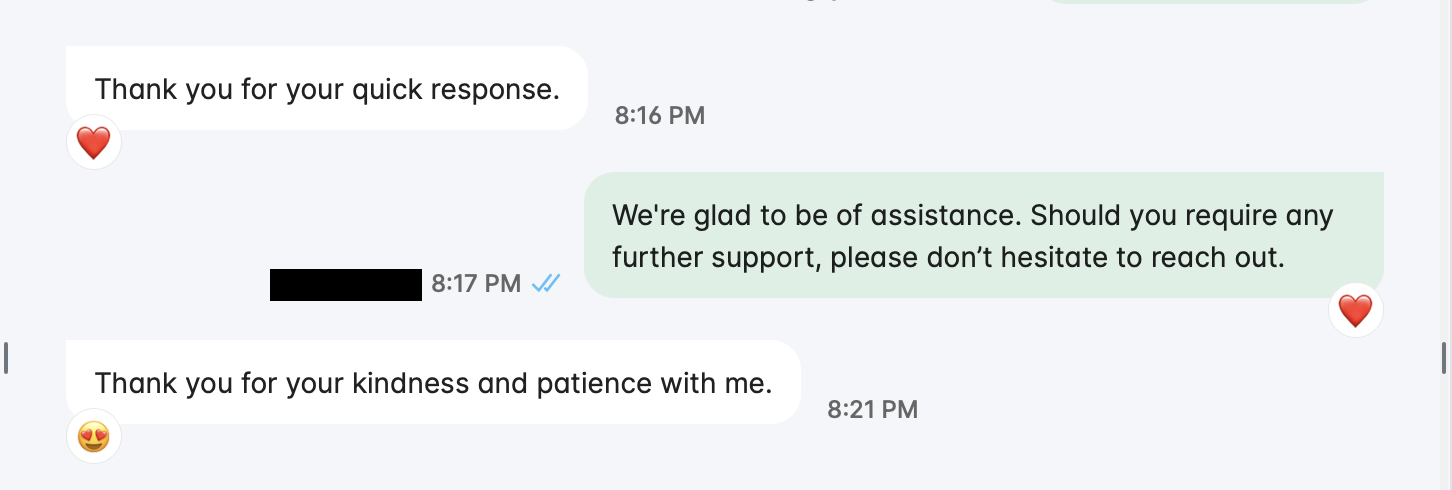

 We are so grateful and proud to be recognized for our quick response and attentive support
3. Transparent Pricing – No Hidden Fees
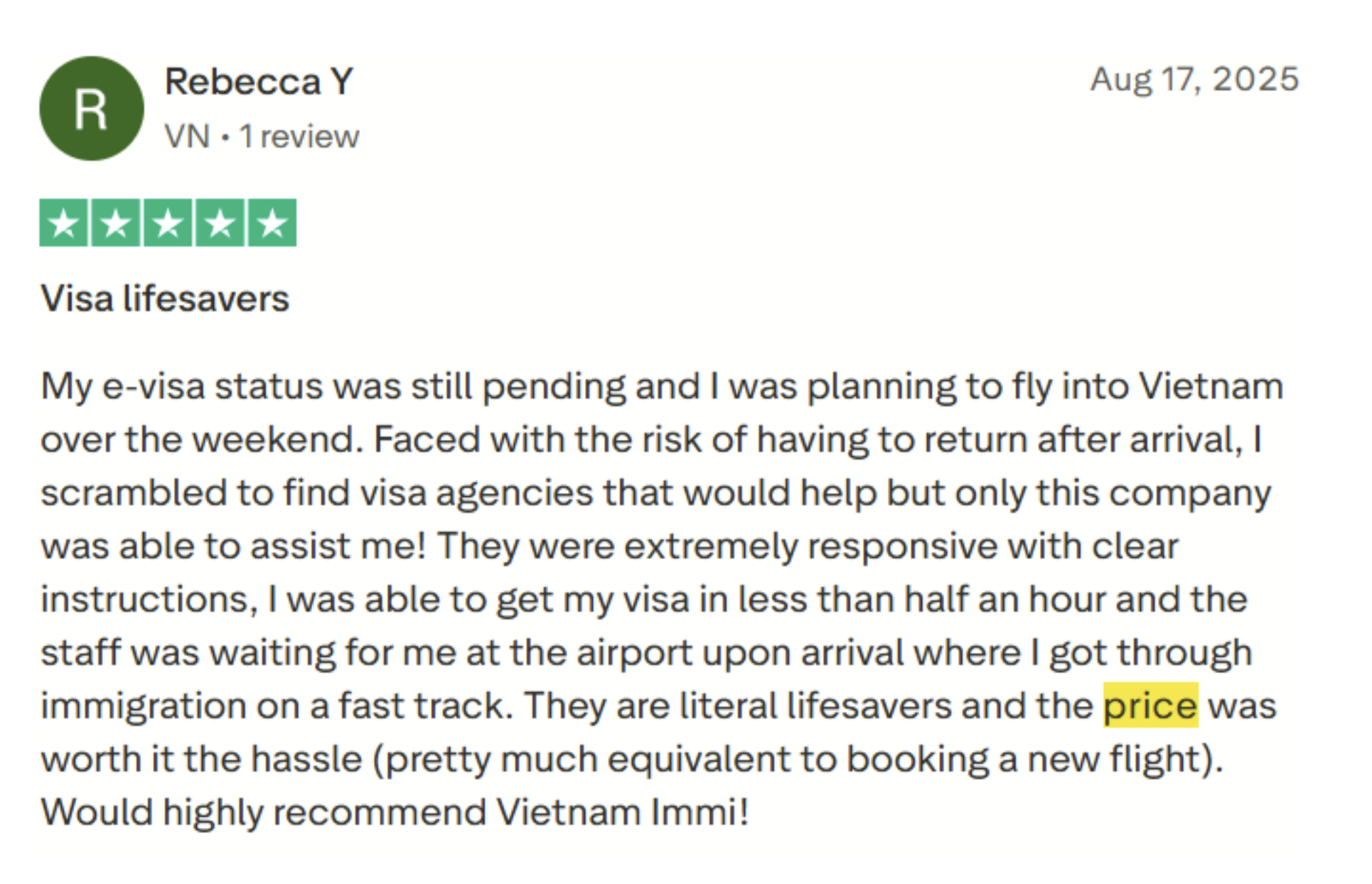
Travel budgeting is hard enough without surprise charges. That's why we pride ourselves on offering transparent and competitive pricing. Many travelers note in their customer testimonials for Vietnam visa services that our fees are straightforward, with no hidden costs.
We provide:
Clear breakdowns of fees based on visa type
No last-minute add-ons or rush charges (unless requested)
Honest advice on what’s really necessary for your trip
Real Customer Feedback:
4. Trusted by Thousands of Travelers Worldwide
We’re proud to have helped thousands of tourists, business travelers, and digital nomads get their Vietnam visas with ease. That reputation is backed by hundreds of 5-star Vietnam visa service reviews across platforms like Google, Trustpilot, and social media.
Our reputation is built on:
Consistent positive customer experiences
High approval rates for visa applications
Repeat clients who trust us every time they visit Vietnam
With so many agencies offering visa services, you might wonder: what makes ours different?
Here’s a quick summary:
Global support: We serve travelers from 100+ countries
All visa types covered: Tourist, business, e-visa, and more
High satisfaction rate: Verified 5-star Vietnam visa service reviews
Human-centered approach: We're not just a system — we’re a team
From your first inquiry to your arrival at a Vietnamese airport, we’re by your side every step of the way.
In conclusion
If you're planning a trip to Vietnam, choosing the right visa assistance can make all the difference. From quick processing to transparent pricing and genuine customer care, we strive to be the best Vietnam visa service for every type of traveler.
Still unsure? Just check out the countless customer testimonials for our Vietnam visa service and see what travelers just like you are saying.
Contact us and let us know your travel plans! Whether you’re coming for leisure or business, our team is here to support you with the latest Vietnam visa updates, urgent visas, and Fast Track airport services.



 84.379.522.522